
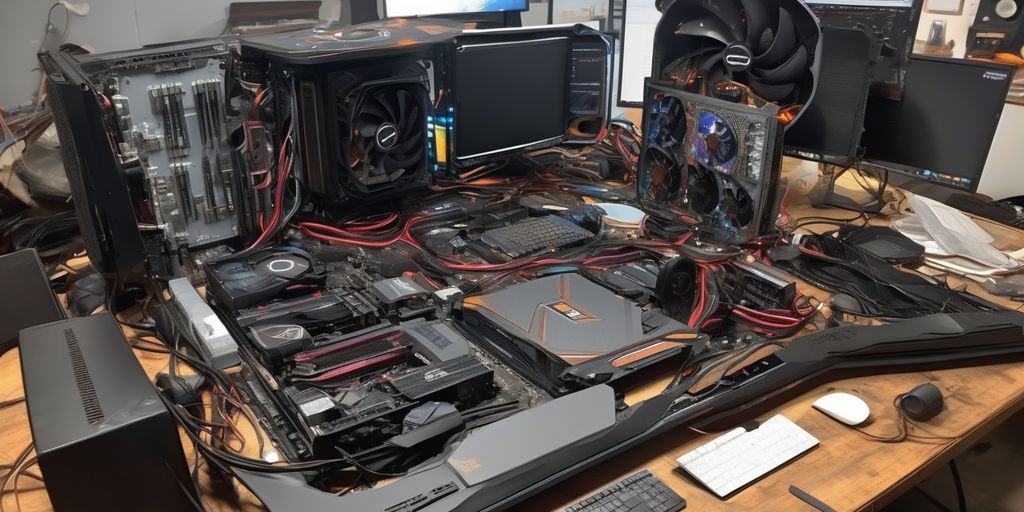
What is Overclocking
Overclocking is a practice that involves increasing the operating speed of a computer component beyond its original specifications. This allows for better performance but also carries risks. In this article, we will explore the different aspects of overclocking, from the components involved to the advantages and disadvantages, including the necessary tools and best practices.
Key Points
- Overclocking increases component speed for better performance.
- The main components involved are the CPU, GPU, and RAM.
- This practice can improve performance but carries risks like overheating.
- Specific tools like BIOS and overclocking software are necessary.
- Following guides and monitoring temperatures are crucial for successful overclocking.
Introduction to Overclocking

Definition of Overclocking
Overclocking is a practice that involves increasing the speed of a computer component beyond its factory specifications. This is done by modifying BIOS settings or specialized software. In other words, it means pushing the hardware to operate faster than intended by the manufacturer.
Origin of the Term
The term "overclocking" literally means "beyond the clock." This practice has existed for a long time but has become more common with the evolution of technologies and performance demands.
Why Overclock?
There are several reasons to overclock:
- Improve PC performance for demanding tasks like gaming or video editing.
- Optimize costs by getting more power without buying new components.
- Customize your PC and explore the limits of your hardware.
In summary, overclocking allows you to get the most out of your hardware, but you must be aware of the risks and precautions to take.
Components Involved in Overclocking
Central Processing Unit (CPU)
The processor is often the first component people think of overclocking. By increasing its frequency, you can achieve higher performance than what the manufacturer intended. This allows you to customize your computer according to your specific needs.
Graphics Card (GPU)
Overclocking the graphics card is also very popular. By pushing the GPU to its limits, you can improve graphical performance, which is particularly useful for video games and graphics-intensive applications.
Random Access Memory (RAM)
RAM can also be overclocked to increase data processing speed. This can make your system more responsive and improve your computer's overall performance.
Processor overclocking is a way to customize your computer. It allows you to adjust power, voltage, core, memory, and many other settings.
The Advantages of Overclocking
Performance Improvement
Overclocking allows you to increase the clock speed of the CPU or GPU, which improves your system's performance. This can be particularly useful for demanding games or applications.
Cost Optimization
By boosting the capabilities of your existing hardware, you can delay the purchase of new components. This means you can extend the lifespan of an older system without spending a lot of money.
PC Customization
Overclocking offers a unique opportunity to customize your PC according to your specific needs. You can adjust the settings to achieve the best balance between performance and stability.
The Risks and Disadvantages of Overclocking
Overclocking, while advantageous, carries significant risks for hardware. By increasing the operating frequencies of the processor or graphics card, more heat is generated, which can permanently damage components if the necessary precautions are not taken. It is therefore crucial to use adequate cooling and monitor hardware temperature during overclocking.
Overheating
One of the main risks of overclocking is overheating. By pushing components beyond their normal limits, they produce more heat. Without an effective cooling system, this excessive heat can cause permanent damage.
System Instability
Overclocking can also lead to system instability. Components running at higher speeds than they were designed for can cause crashes, unexpected reboots, and other unpredictable behavior.
Reduced Component Lifespan
Finally, overclocking can reduce the lifespan of components. By operating them at higher stress levels, their wear and tear accelerate, which can lead to premature failures. Even if overclocking can provide a nice little FPS boost in CPU-intensive games, it is important to weigh these benefits against the potential risks.
Necessary Tools for Overclocking

BIOS/UEFI
To overclock, the first step is often to modify the settings in your motherboard's BIOS or UEFI. These interfaces allow you to change the base clock frequency and the voltage applied to the processor. By adjusting these settings, you can increase the performance of your CPU or GPU.
Overclocking Software
Some motherboard manufacturers, like MSI and Asus, offer software that simplifies overclocking under Windows. For example, Asus's AI-suiteII software allows real-time control of temperatures and fan speeds. These tools are very useful for those who prefer a graphical interface over going through the BIOS.
Cooling Systems
Overclocking increases the heat produced by components. Therefore, it is crucial to have a good cooling system. Options include additional fans, more efficient heat sinks, or even liquid cooling systems. Without adequate cooling, you risk overheating your hardware, which can lead to permanent damage.
Good cooling is essential to maintain the stability and longevity of your components when overclocking.
Steps for Overclocking
Before starting to overclock, it is crucial to prepare your system thoroughly. Make sure your PC is clean and well-ventilated. Check that all components are in good condition and that drivers are up to date. Good preparation can prevent many problems later on.
Overclocking is mainly done by modifying the BIOS or UEFI settings. You can adjust the clock frequency and the voltage applied to the processor or graphics card. Here are the steps to follow:
- Reboot your PC and access the BIOS/UEFI.
- Look for clock frequency and voltage settings.
- Gradually increase these values, testing at each step.
- Save changes and reboot the system.
After changing the settings, it is essential to test the stability of your system. Use benchmarking software to ensure everything is working correctly. If your system is unstable, revert to the previous settings and adjust them again.
A short lesson on overclocking a Core i9-14900KS to over 9.1 GHz demonstrates the importance of stability testing. The overclocking team that pushed Intel's flagship to 9.1 GHz reflects on their achievement in a video, sharing the keys to good OC—which you will need to follow.
By following these steps, you can improve your PC's performance while minimizing risks.
Overclocking for Gaming PCs
Serious gamers who want to fully enjoy a game can consider overclocking, as modern video games heavily tax computer systems. Overclocking allows you to increase your PC's power at a lower cost. For the more adventurous, the goal is to push a gaming PC's performance a little further, or to make the practice an end in itself.
Overclocking can offer significant performance gains. Here are some examples:
| Component | Performance before overclocking | Performance after overclocking |
|---|---|---|
| Gaming Processor | 3.5 GHz | 4.2 GHz |
| Graphics Card | 1500 MHz | 1800 MHz |
| Gaming PC RAM | 2400 MHz | 3200 MHz |
These improvements allow you to play more demanding games with higher graphics and better fluidity.
Overclocking is not without risks. Here are some precautions to take:
- Monitor temperatures: Use software to monitor the temperature of your components.
- Use a good cooling system: Adequate cooling is essential to prevent overheating.
- Test stability: After each modification, perform stability tests to ensure your system remains stable.
Overclocking can transform your gaming setup, but it is crucial to follow best practices to avoid problems.
By following these tips, you can optimize your PC for an improved gaming experience.
Best Practices for Successful Overclocking

Follow guides and tutorials
To successfully overclock, it is essential to follow reliable guides and tutorials. These resources will provide detailed instructions and tips to avoid common errors. Take the time to understand each step before proceeding.
Monitor temperatures
Overclocking can significantly increase the temperature of your components. Use monitoring software to keep an eye on temperatures and ensure your cooling system is efficient. Good thermal management is crucial to avoid overheating.
Use benchmarks
Benchmarks are essential tools for testing the stability and performance of your system after overclocking. They allow you to verify if the changes made have actually improved performance and if your system remains stable under load.
By following these best practices, you can maximize your PC's performance while minimizing the risks associated with overclocking.
Alternatives to Overclocking

Component upgrades
Instead of overclocking your RAM, you can simply upgrade your components. For example, replacing a processor or graphics card with a newer, more powerful model can provide significant gains without the risks associated with overclocking.
Software optimization
Software optimization is another alternative. By adjusting your operating system settings and using cleaning and optimization software, you can improve your PC's performance. This includes managing startup programs, defragmenting your hard drive, and updating drivers.
Using turbo modes
Some components, such as processors, have integrated turbo modes. These modes automatically increase the clock speed when needed, providing a performance boost without manual intervention. This is a simple and safe solution to get more power from your hardware.
By choosing one of these alternatives, you can improve your PC's performance without taking the risks associated with overclocking.
The Impact of Overclocking on Power Consumption
Overclocking can have a significant impact on your PC's power consumption. By increasing the operating frequency of components, you also increase their energy consumption. This can lead to a noticeable increase in heat generated, requiring more efficient cooling solutions.
Increased Consumption
Overclocking must be done with caution, as it can increase power consumption and heat generation. For example, an overclocked processor can consume up to 50% more power than its normal consumption. This increase can vary depending on the level of overclocking and the components used.
Power Management
To manage this increased consumption, it is essential to have a power supply capable of providing the necessary power. A quality power supply with good energy efficiency is recommended to avoid power surges and failures.
Solutions to Reduce Impact
There are several ways to reduce the energy impact of overclocking:
- Use high-energy efficiency components.
- Optimize overclocking settings to find a balance between performance and consumption.
- Install efficient cooling systems to dissipate the additional heat.
In summary, while overclocking can improve your PC's performance, it is crucial to consider the increased energy consumption and implement adequate solutions to manage this increase.
Overclocking and Component Warranty
Overclocking can have a significant impact on the warranty of your components. It is crucial to understand these implications before proceeding.
Conclusion
In summary, overclocking is a technique that allows you to increase the performance of certain computer components, such as the processor or graphics card. While it may seem risky, with the right precautions, it can be done safely. This practice is particularly popular with video game enthusiasts and demanding users who seek to get the most out of their hardware. However, it is important to do your research and follow reliable guides to avoid any potential damage. Ultimately, overclocking can offer a significant power gain, but it must be performed with care and knowledge.
Frequently Asked Questions
What is overclocking?
Overclocking is when you increase the speed of a computer component such as the processor or graphics card beyond what the manufacturer recommends.
What components can be overclocked?
Components that can be overclocked include the central processing unit (CPU), graphics processing unit (GPU), and random-access memory (RAM).
Why overclock?
Overclocking can improve your computer's performance, which is useful for video games or demanding applications.
What are the risks of overclocking?
Risks include overheating, system instability, and reduced component lifespan.
How to avoid overheating when overclocking?
To prevent overheating, it is important to use a good cooling system and regularly monitor temperatures.
Does overclocking void component warranties?
Yes, overclocking can void your component warranties as it pushes components beyond their factory specifications.
What tools are needed for overclocking?
You will need access to your computer's BIOS/UEFI, overclocking software, and good cooling systems.
Can you overclock a laptop?
It is generally not recommended to overclock a laptop because they have less efficient cooling systems than desktop computers.
If you're ready to invest in a quality gaming PC, visit our online store. We offer a varied range of PC Gaming components and accessories to meet all your needs.
Don't let your gaming experience be limited by outdated equipment. Choose performance and gaming immersion. Click on the image below now and discover our selection of quality products for demanding gamers.
